

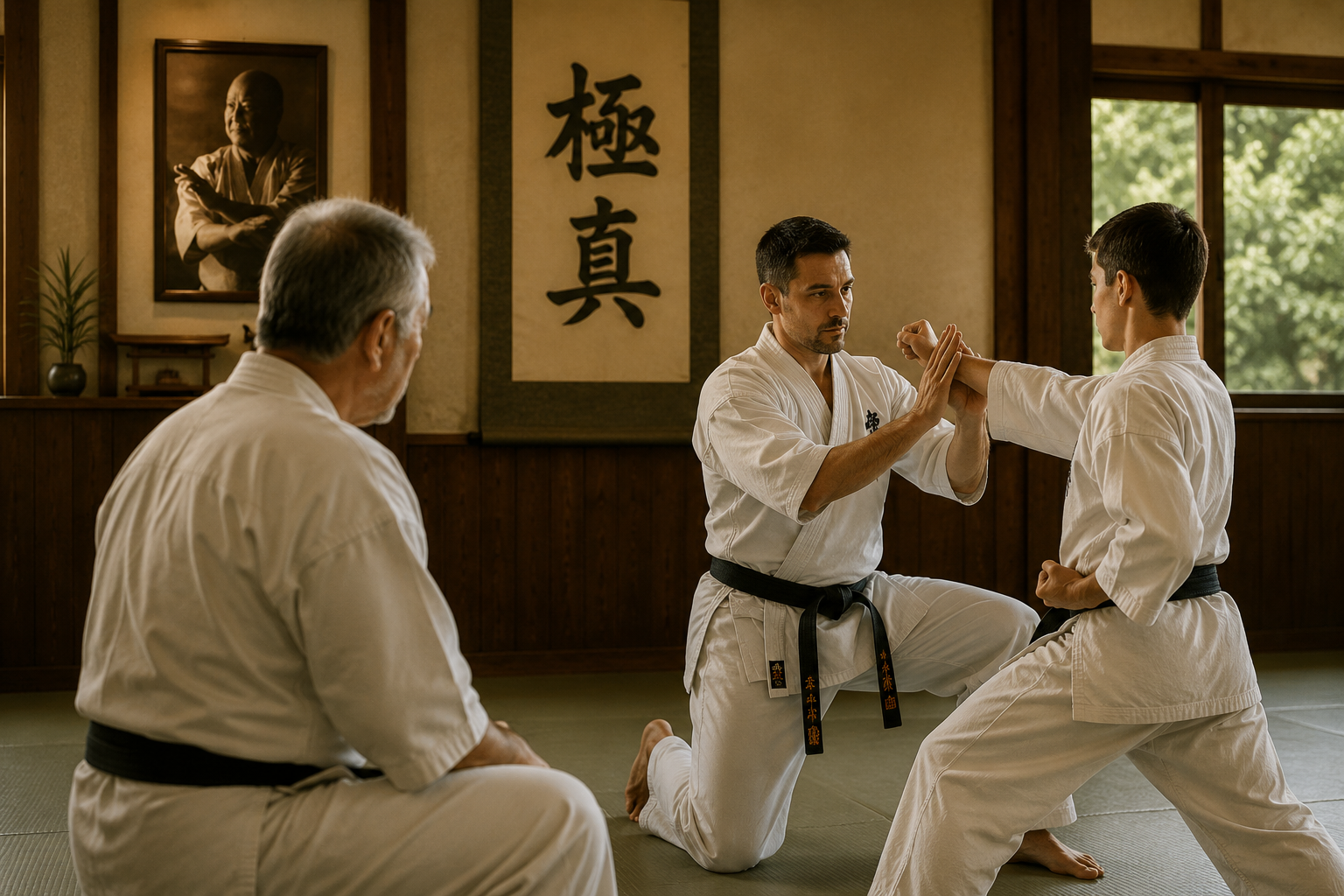

Recently I found myself watching one of my students work with a beginner. What struck me wasn’t the techniques he was teaching. It was the way he was teaching them. The explanations sounded familiar. The corrections sounded familiar. Even some of the mannerisms felt familiar. For a moment, it was like watching a younger version of myself standing on the dojo floor.
The experience made me smile. The longer I watched, the more I found myself thinking about my own teacher and how much my approach to karate had been shaped by his influence.
 The Influence of a Teacher
 The Influence of a Teacher
As martial artists gain experience, our training often becomes more self-directed. We learn to identify our own weaknesses, recognize areas that need improvement, and take greater responsibility for our continued development. Along the way, each of us gradually adapts what we have been taught to fit our own circumstances and understanding.
Yet if we’re honest, much of that foundation was laid by those who taught us. Every teacher leaves fingerprints on their students.
Sometimes those influences are obvious. A particular way of performing a technique, a favorite training drill, or a phrase repeated so often that students find themselves saying it years later without even realizing it.
Other influences run much deeper. Over time, students absorb their teacher’s expectations, attitude toward training, understanding of discipline, and ideas about what karate is supposed to accomplish. These things are rarely taught directly, yet they often leave the most lasting impression.
Like many martial artists, I can still hear my teacher’s voice in my head when I train. I can recognize ideas, habits, and approaches that I inherited years ago and have carried with me ever since. Some of them have undoubtedly evolved over time. Others remain almost exactly as they were when they were first passed on to me.
Over the years I have had the opportunity to train with many instructors, and each of those experiences contributed something to my understanding of karate. Yet when I look closely at my own approach to training and teaching, the strongest influence is still the teacher who shaped my foundation.
I suspect this is true for most instructors. No matter how independent we become, a part of our teacher remains with us.
Passing Lessons Forward
The interesting thing is that the process doesn’t stop with the student. A lesson learned by one generation can easily end there, but when that student eventually becomes a teacher, the lessons continue moving forward. What was once learned is now being passed on to someone else. A student learns from a teacher. Years later, that student teaches someone else. The techniques may remain the same, but so do many of the ideas, habits, and expectations that accompanied them. In that sense, the influence of an instructor can extend far beyond their own students.
More Than Information
In Kyokushin, we often speak about lineage. Usually this means tracing rank and instruction back through previous generations of teachers. While those connections are important, I sometimes think the most meaningful part of lineage isn’t found on a certificate. It’s found in the example that is set day after day on the dojo floor.
Most students pay far more attention than we realize. They watch how instructors train, how they conduct themselves, and what standards they expect. They listen to the corrections that are made, the lessons that are emphasized, and the values that are reinforced through years of practice. Much of this takes place without anyone consciously thinking about it.
Yet over time those influences accumulate. Eventually, the student begins to teach, and some of those same habits and expectations begin to appear in the next generation. The chain continues.
Perhaps that is one of the reasons martial arts continue to have value even in an age when information is available everywhere.
Techniques can be learned from books and videos. Information is easier to access today than at any point in history. Yet the most important lessons are still transmitted person to person, through observation, through example, and through years spent training together.
The Lessons a Teacher Leaves Behind
Looking back, I realize that many of the qualities I value most in karate were not things I learned from reading about them. They were things I witnessed in the person who taught me. And now, many of those same lessons are being passed on through me.
Watching my student teach reminded me of something that is easy to forget. We are all reflections of our teachers.
And perhaps the greatest compliment a teacher can receive is seeing a little of themselves in the next generation.
Osu!
Connect with us:
Follow Kyokushin Karate Blog on Facebook, Instagram, and X.
Be sure to visit Kyokushinkai Karate, our Facebook group — one of the largest Kyokushin communities online today.
Learn more about Bill Stewart and Texas Kyokushin Karate, where we continue the Kyokushin tradition in Texas.
