


The Japanese word giri is often translated as duty or obligation, although neither word completely expresses what it means within a relationship. In the dojo, I think of giri as the responsibility created between people who have accepted obligations toward one another. That responsibility can be seen in many aspects of karate, but one of its most visible reminders is found in the things we wear on our gi.
The Responsibility of the Dojo Patch
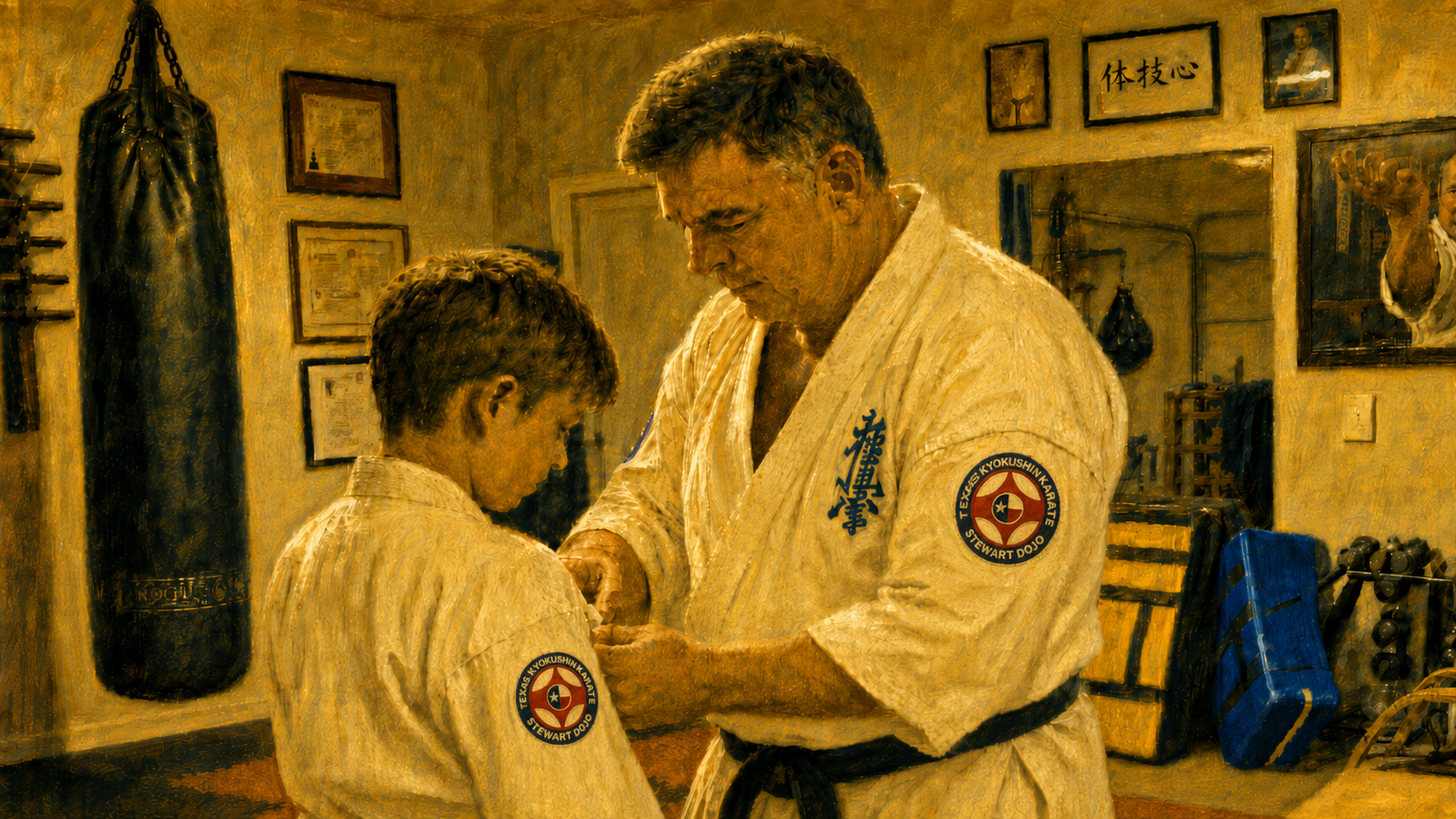
A dojo patch may seem like a small thing. It identifies where someone trains and gives students a visible connection to their school. When someone wears that patch at a tournament, seminar or grading, however, their karate and conduct become associated with the dojo they represent. How they treat instructors, officials, opponents and other students reflects upon them personally, as well as upon the school and the instructor responsible for their training.
Students have always been a reflection of their teachers. That does not mean every student will move exactly like the instructor or eventually share every opinion the instructor holds. As people gain experience, their karate naturally develops around their own abilities, interests and personalities. Even so, their etiquette, technique, attitude toward rank and treatment of other karateka usually reveal something about the environment in which they developed.
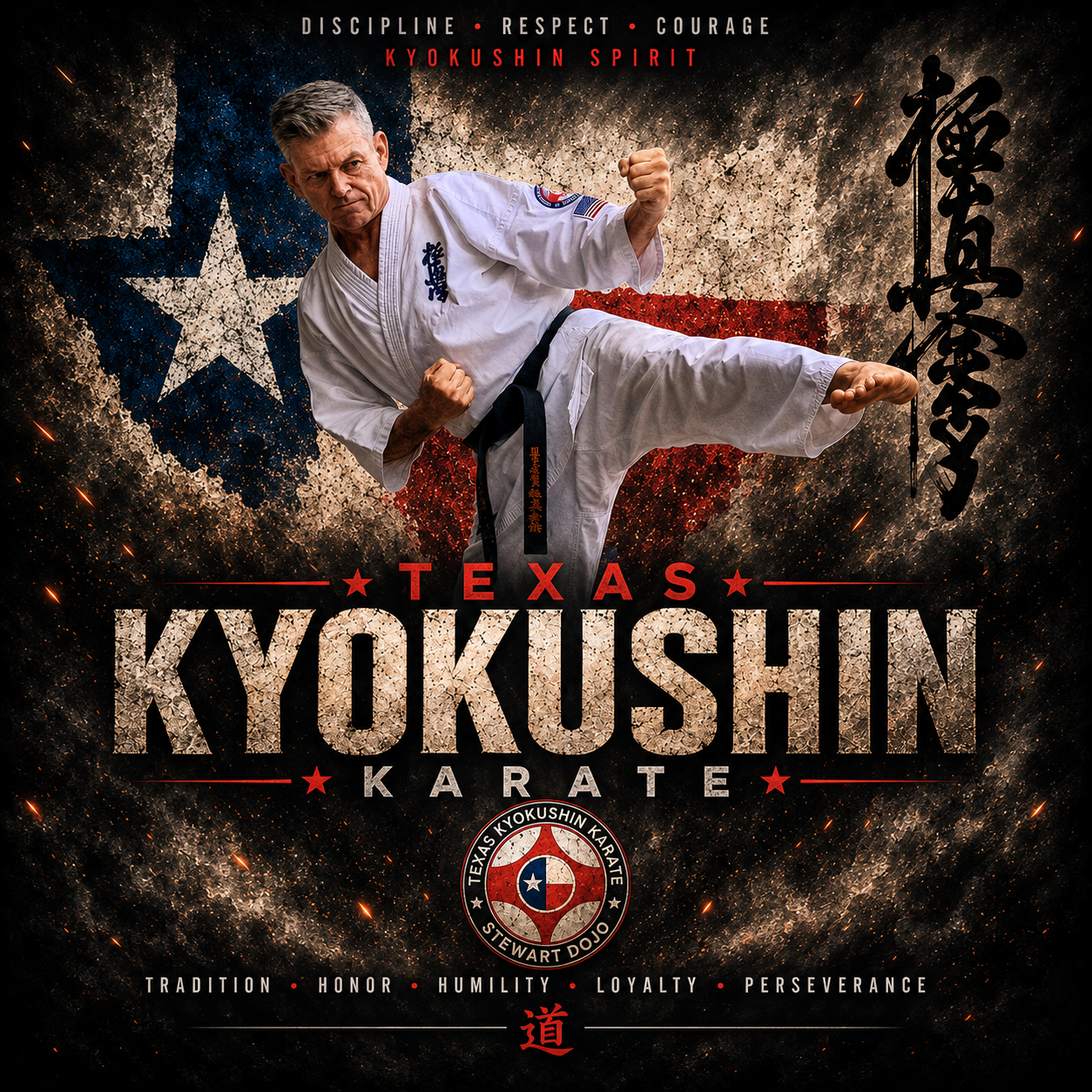
In my case, the connection is especially direct because my patch says Stewart Dojo. A student wearing it represents me personally as well as the dojo because my name is there. My teacher’s school was called Swanson’s School of Karate, and those of us who came from his dojo carried his name with us. That example influenced my decision to use my own name for Stewart Dojo. The responsibility, however, does not depend upon an instructor’s name appearing on the uniform. Whatever a patch says or depicts, it identifies a relationship and carries the reputation of the dojo behind it. When someone sees one of our students, they know where that student came from and, whether the instructor’s name appears on the patch or not, who bears responsibility for much of the training that student has received.
An instructor cannot control everything a student does, particularly once that student walks outside the dojo. People make their own decisions, and even the best teacher will sometimes have a student behave in a way that does not reflect what was taught. Still, when someone wears my dojo patch, I am saying that I stand behind that person and the karate they have been given. I accept some responsibility for what they represent.
It is not enough for an instructor to accept credit when a student performs well and distance himself when that same student falls short. If a student’s karate is lacking, the instructor should be willing to consider what was taught, what was overlooked and what should have been corrected. That willingness to accept responsibility is part of the giri that exists between teacher and student.
The student carries obligations of their own. Those include training sincerely, behaving properly, respecting the standards of the school and understanding that individual actions can affect the reputation of others. Wearing a dojo patch should mean more than having paid dues or purchased a uniform. It means accepting that wherever you go, you carry something beyond yourself.
A student who loses control at a tournament, treats an official disrespectfully or behaves poorly toward another karateka may leave the event behind, but the memory of that conduct remains with the people who witnessed it. They may remember the patch, the dojo and the instructor along with the behavior. That is one reason right conduct matters before the mistake is made, not merely afterward. The importance placed upon right conduct is hardly foreign to the traditions that influenced Japanese budo. In Buddhism, Right Action and Right Speech are themselves parts of the Noble Eightfold Path. In that sense, giri asks the student to consider not only what they have a right to do, but also what they owe to the people whose name and reputation they carry.
The instructor’s obligation is equally real. A teacher owes students honest instruction, appropriate standards and the willingness to correct them when necessary. An instructor should not promote someone simply to keep them happy, send an unprepared student into a grading or competition and then blame the student when things go badly. Nor should the teacher abandon a student the moment standing behind them becomes inconvenient.
That does not mean defending every mistake or excusing poor conduct. Sometimes fulfilling the obligation requires confronting the student, correcting the behavior or deciding that the person can no longer represent the dojo. Support and accountability are not opposites. Both are part of the responsibility an instructor accepts when allowing someone to represent the school.
What the Kyokushin Kanji Represents
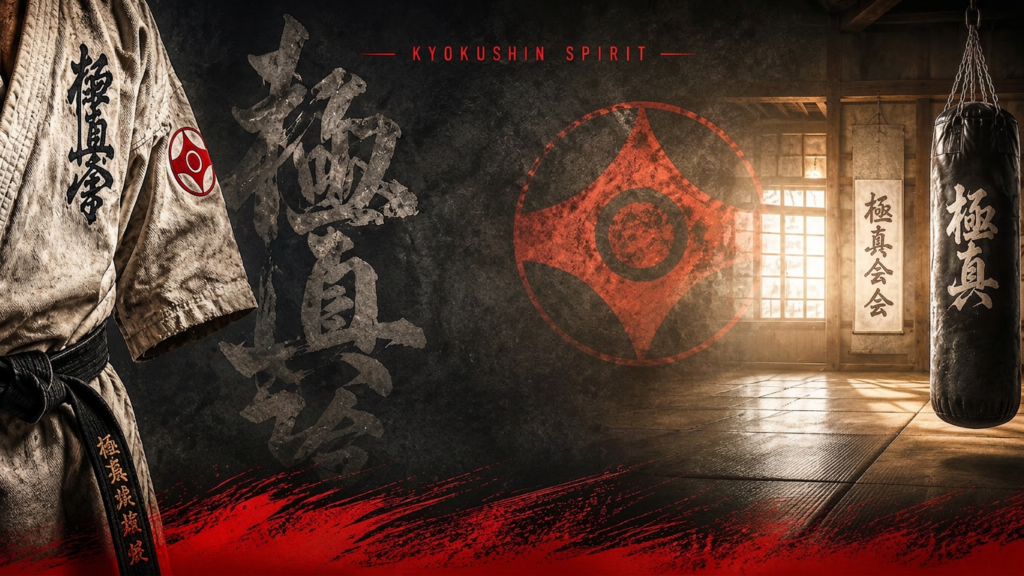
The dojo patch is only one of the things we wear. On the left side of the gi is the Kyokushin kanji, which represents something larger than any one teacher, dojo or organization. It represents an art shaped long before many of today’s practitioners were born and before most of us ever entered a dojo. When we wear the kanji, we identify ourselves as Kyokushin karateka. Most people outside our immediate circles know little about our organizational affiliations, internal disagreements or different interpretations of curriculum. They see the kanji and understand that the person wearing it represents Kyokushin. That creates another level of giri, because our conduct now reflects upon a tradition shared by people far beyond our own dojo.
None of us created the reputation associated with Kyokushin by ourselves. We inherited it through the teachers who trained us directly and through the work of others whose influence reached us through their students, their teaching and the karate they helped shape.
In my own case, that inheritance begins with my teacher, Shihan Jim Swanson. It also includes senior Kyokushin figures I have had the opportunity to meet and train with, including Hanshi Steve Arneil, Shihan Michael Monaco, Shihan David Pickthall, Shihan Bobby Lowe, Saiko Shihan Shigeru Oyama and Shihan Yasuhiko Oyama. Beyond them are many people I never met, but whose influence remains present in the techniques, traditions and standards passed down to us. Some contributed to my karate directly. Others influenced my teachers, helped shape Kyokushin before I began training or preserved knowledge that eventually reached me through another generation.
We benefit from the work of all of them. None of us earned the history or reputation attached to the kanji merely by purchasing a gi and sewing on a patch. We inherited something that had already been built through decades of training, teaching, competition and sacrifice. Wearing the kanji allows us to share in that history, but it also places an obligation upon us not to diminish it.
An instructor who promotes students without proper preparation, compromises standards for personal advancement or places ambition ahead of responsibility affects more than a single school. A student who behaves poorly while wearing the kanji reflects upon more than themselves. The damage may be small in any one instance, but each of us contributes in some way to how Kyokushin is understood by those who encounter it.
That does not mean every Kyokushin karateka must agree on everything. Our history has produced different organizations, teaching methods and ideas about competition and training. Those differences are real and are unlikely to disappear. The responsibility created by giri does not require us to pretend those disagreements do not exist, but it should influence how we conduct ourselves while expressing them.
We can disagree without forgetting that we claim the same heritage and continue to identify ourselves through the Kyokushin kanji, even when the versions we wear are not identical. Whatever our organizational affiliation, we have inherited something from many of the same people, and our actions help determine what others will think of that inheritance.
Giri: What We Carry Forward
The dojo patch tells people where we come from, while the Kyokushin kanji tells them what tradition we claim to represent. Neither is simply decoration. Both connect us to people who trained before us, those who train beside us and those who will judge the dojo and Kyokushin by what they see in us.
When students enter a dojo, they inherit a reputation they did not build alone. Their teacher, their seniors and earlier generations have already contributed to it. In time, they will add something of their own, for better or worse. The same is true of instructors. What we teach, what we tolerate and the standards we choose to uphold will help determine what our students carry forward.
When I allow someone to wear my dojo patch, I am saying that I stand behind the training they have received. A student who wears it accepts the responsibility of representing the dojo. When both of us wear the Kyokushin kanji, we acknowledge that our obligations extend beyond ourselves and beyond the years we may spend training together.
We earn the right to continue wearing those symbols through the way we train, the way we conduct ourselves and the way we treat the people whose trust has been placed in us. The patch and the kanji identify where we belong, but they also represent a promise that we will try to leave the dojo and Kyokushin no less worthy of respect than we found them. That promise, and the responsibility shared by teacher and student to keep it, is at the heart of giri.
Osu!
What does giri mean to you in your own training? Have you ever thought about what your dojo patch or the Kyokushin kanji represents beyond simply identifying where you train? Share your thoughts in the comments. If you enjoy articles exploring the history, philosophy and practice of Kyokushin karate, subscribe to Kyokushin Karate Blog so you don’t miss future posts.
Follow Kyokushin Karate Blog on Facebook, Instagram, and X.
Be sure to visit Kyokushinkai Karate, our Facebook group — one of the largest Kyokushin communities online today.
Learn more about Bill Stewart and Texas Kyokushin Karate, where we continue the Kyokushin tradition in Texas.
